
To More Inquiry
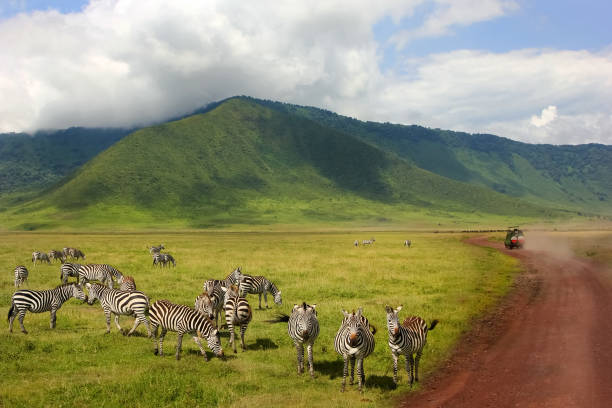
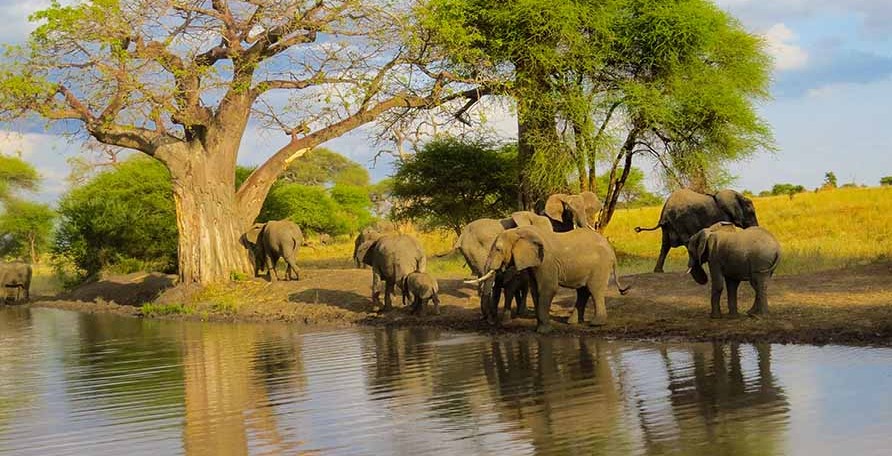
Serengeti National Park is a World Heritage Site teeming with wildlife: over 2 million ungulates, 4000 lions, 1000 leopard, 550 cheetahs and some 500 bird species inhabit an area close to 15,000 square kilometers in size. Join us on a safari and explore the endless Serengeti plains dotted with trees and kopjes from which majestic lions control their kingdom; gaze upon the Great Migration in awe or find an elusive leopard in a riverine forest. Or perhaps see everything from a bird’s-eye view and soar over the plains at sunrise during a hot air balloon safari. Accommodation options come in every price range – the sound of lions roaring at night is complimentary.
In the late 1800s and early 1900s, explorers and missionaries described the Serengeti plains and the massive numbers of animals found there. Only minor details are all that were reported before explorations in the late 1920s and early 1930s supply the first references to the great wildebeest migrations, and the first photographs of the region.
An area of 2,286 square kilometers was established in 1930 as a game reserve in what is now southern and eastern Serengeti. They allowed sport hunting activities until 1937, after which it stopped all hunting activities. In 1940 Protected Area Status was conferred to the area and the National Park itself was established in 1951, then covering southern Serengeti and the Ngorongoro highlands. They based the park headquarters on the rim of Ngorongoro crater.
So, the original Serengeti National Park, as it was gazetted in 1951, also included what now is the Ngorongoro Conservation Area (NCA). In 1959, the Ngorongoro Conservation Area was split off from the Serengeti National Park and they extended the boundaries of the park to the Kenya border. The key reason for splitting off the Ngorongoro area was that local Maasai residents realized that they were threatened with eviction and consequently not allow to graze their cattle within the national park boundaries. To counter this from happening, protests were staged. A compromise was reached wherein the Ngorongoro Crater Area was split off from the national park: the Maasai may live and graze their cattle in the Ngorongoro Crater area but not within Serengeti National Park boundaries.
In 1961 the Masai Mara National Reserve in Kenya was established and in 1965 the Lamai Wedge between the Mara River and Kenya border was added to Serengeti National Park, thus creating a permanent corridor allowing the wildebeests to migrate from the Serengeti plains in the south to the Loita Plains in the north. The Maswa Game Reserve was established in 1962 and a small area north of The Grumeti River in the western corridor was added in 1967.
The Serengeti National Park was among the first places to be proposed as a World Heritage Site by UNESCO at 1972 Stockholm conference. It was formally established in 1981.
If this is your first safari trip (we feel your excitement!), you might be curious about what your safari days will look like. Although this can vary slightly from camp to camp, there is generally a day-plan most lodges follow, simply because the rhythm of wildlife and weather conditions are changeable. Don’t worry if you are not much of a morning person; there is plenty of time for napping later in the day. We can also guarantee that the minute you are awakened by the sound of birds and a far-off cry of a scavenging hyena, you will become an early bird yourself.
Many roads lead to Serengeti National Park. So which one should you choose? This really depends on your wishes, needs and further travel plans. If you’re looking for a fast and convenient way to travel, or just have a few days to spend in the area, a fly-in safari is the option for you. If you’re planning to visit some other sites as well or looking to save some money on transportation, a drive-in safari is the way to go. A popular option is to combine these two, starting with a drive-in safari from Arusha, with an overnight stay at the Ngorongoro Crater along the way. From the crater it’s just an three hour drive to the Serengeti National Park. After your Serengeti safari you can fly out from one of the airstrips – saving you at least eight hours of driving to Arusha. More information on transportation modes may be found on our how to travel to the Serengeti National Park page.
Upon arrival at one of Serengeti’s airstrips, a guide or tracker from the lodge will pick you up and take you to their property. Some of the more exclusive lodges even have their own airstrip; giving you the opportunity to maximize your time to enjoy the splendours of the savannah and the lodge. The coming days you will be exploring the Serengeti with one of the guides from the lodge.
When choosing to book a drive-in safari a driver/guide from Arusha will take you to your lodge in the Serengeti in a 4×4 safari vehicle (and other places to visit -depending on your itinerary- along the way). In general, the driver/guide will also be your guide in the Serengeti and take you on the game drives through the park. However, at some of the more exclusive Serengeti lodges it is a requisite to go on game drives with one of the guides at the lodge, as they want to make sure that their high standards are met and you will have the best possible (safari) experience at their lodge.
A four-course dinner of delicate dishes, with views over the vast plains, under a tree lit by lanterns, or fuelling up on freshly made macarons during a high-tea before the afternoon game drive. And how about unwinding after an exhilarating day with a buffet of appetizers and a glass of full-bodied African wine? Although the highlight of your safari is of course the wildlife viewing; what is a safari day without excellent meals in between your activities? You will be pleasantly surprised by the high standards the Serengeti lodges live by when it comes to drinks and dining, even though they’re all located in remote places. This will definitely be something to reminisce about once back at home. There is no lack of fresh produce, local specialities, as well as international dishes, sometimes with a twist personal to the chef. And it’s a reassuring thought that all meals, as well as coffee and tea and (often) local brand drinks, are included in the price.
Most travellers pick the dry season (which takes place from late June to October) for a safari in the Serengeti National Park. Animals gather around rivers and waterholes to quench their thirst. The Great Migration is at its absolute prime and your chances of witnessing an iconic river crossing are at their best. Most lodges will remain open during the more tranquil ‘wet season’ when the rains turn the dry landscape into a lush, green oasis and the birthing season begins. Read more about Serengeti weather & climate on this page. Here are some pros and cons for the wet and dry season.
Private safaris offer personalized experiences, while group tours are budget-friendly.
Spend at least 3-5 days in Serengeti to fully appreciate its wonders.
Light, neutral-colored clothing, a wide-brimmed hat, and a warm jacket for chilly mornings.
A good camera with a zoom lens, binoculars, and a power bank are must-haves.
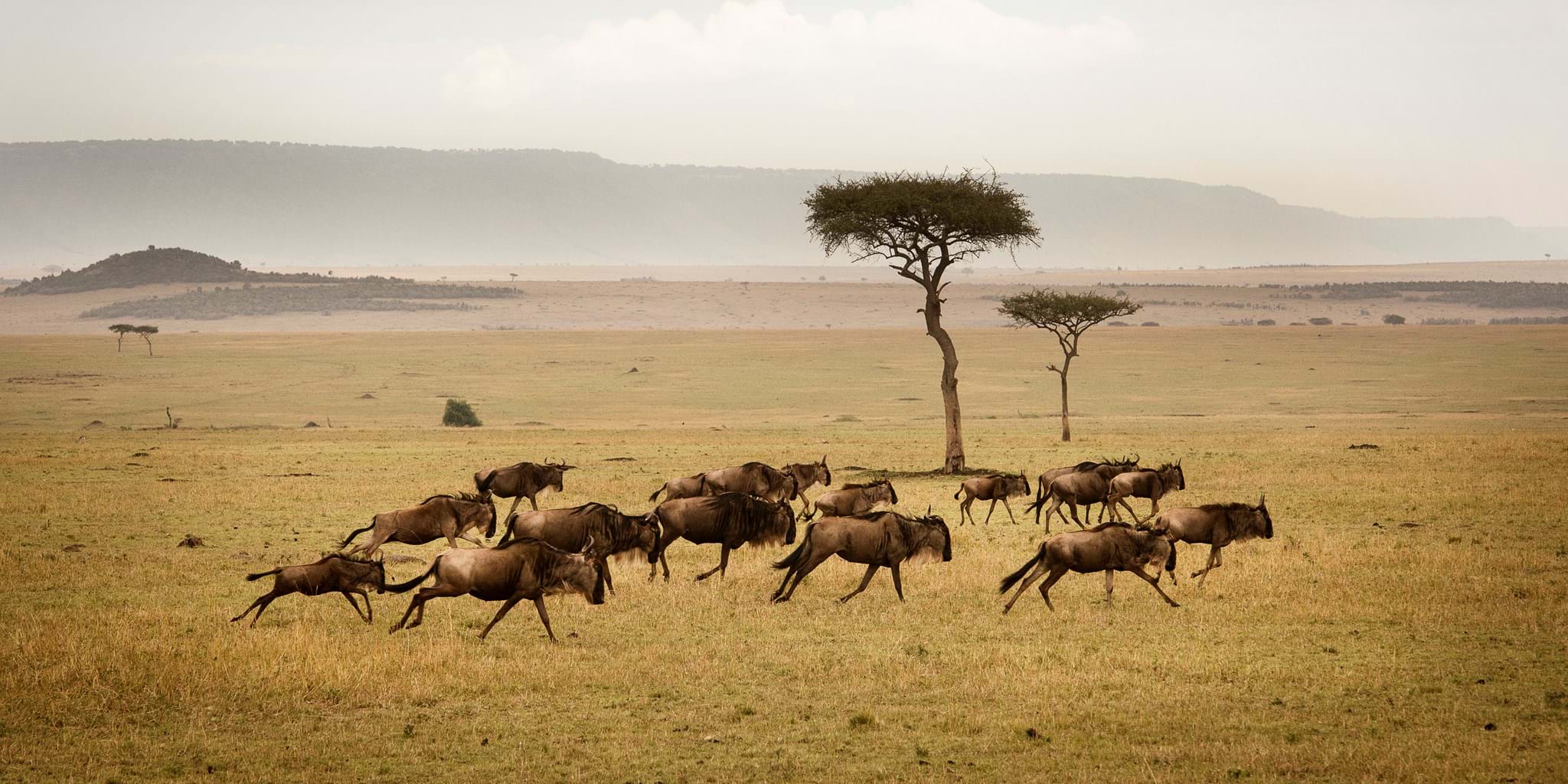
The race of life for the herbivores of the Serengeti! This is the greatest show on our planet, and you’ll get the opportunity to witness this stunning spectacle on Safaris in Serengeti.
The expedition of the main cast in the migration – the two million wildebeests begins in Southern Serengeti. This happens after the mass calving season, in the months of January and March. This is the favourite season for all of the safari-goers and the atmosphere during this time is filled with new life and exciting action.
The 800-kilometre journey of the supersized herds of wildebeests, zebras, and gazelles is the largest mammal migration on Earth. The timing of the migration corresponds with the wet season when the short grass plains turn a lush green.
Serengeti’s northern ecosystem receives the highest amount of rainfall, and yet the grasses are the least nutritious. This is the dry season getaway for the herds, which is until the grass transforms greener again. The result is a clockwise movement from the south, west, north, and finally back again to the south.
The picture of the circle of life is represented perfectly in Serengeti’s Great Migration. The expedition begins in the southern region of the Serengeti. This is when the calves are born. Predators like hyenas and lions are seen constantly looking for prey, and tons of calves are born within just a few weeks. This predator-prey interaction is one of the most enthralling moments you’ll ever witness.
The drought arrives in May and the herd moves north, towards the Masai Mara in Kenya grazing down the high grass. They’re quickly followed by zebras and gazelles.
With the beginning of the short rains in late October, the migrating herds make their way back to the Serengeti. And, by December the herds trek past the Seronera region to finally return to their calving grounds. Thus, migration comes full circle.
Although some variations happen at different points, the migration in Serengeti follows a fairly predictable annual cycle. This is dictated by the local rainfall patterns. The following periods are the cycles of the Great Migration.
The main calving grounds are in the Seronera region. Wildebeests stick around this area until the long rains (around late April and early May). The great news is that this section of the Serengeti is easily accessible and the surroundings are wonderfully vibrant.
February is the calving season in the Ndutu plains. Several wildebeests and zebras give birth to calves and this spectacle works as a magnet for the predators.
Then, in late March and early April, the herds move again in search of greener grasses. Witnessing the actual migration in this period may be a bit challenging, but you’ll for sure see large herds on the move.
These months see the wildebeests getting ready for their 800-kilometre-long trek. This is the time when you’ll get the chance to see one of the greatest phenomena on the planet. I.e. more than a million wildebeests marching in a column up to 40 km long.
During this journey, the herds move towards the Western Corridor. This is where they face the major challenge- crossing the Grumeti River. Many animals perish here, as they are awaited by the deadliest crocodiles. This is the circle of life where the weak ones have no place in the natural course of the world.
After tackling the battle of the Grumeti River, the herds move further north and come against the greatest battle for survival. This is the Mara River Crossings. So many iconic pictures of this spectacle have been taken here. Whilst, on safaris in Serengeti, you’ll witness these herds tumble into the great Mara River where some of the deadliest crocodiles await attack.
After the Mara crossings, the herds move towards the northwestern plains and eventually to the Masai Mara National Reserve in Kenya. An interesting thing that happens is about half of the herd stays on the Tanzanian side, in the Mara Serengeti region.
This period sees the herd cross the northern plains and Lobo hills region of the Serengeti. This area is rarely visited, so if you want to experience the Great Migration in complete exclusivity, then this would be the time.
The herds return to the short grass plains of the calving grounds around the Ndutu region in late November. And from here, the Great Migration begins all over again.
Witnessing the greatest show on Earth will be an awe-inspiring sight, that’s for sure. But, many visitors overlook the fact that Serengeti National Park has many other things to offer too. Below are some examples.
The culture inside the Serengeti National Park is just as rich as the wildlife. It is a blend of impacts. The impacts that the native tribal communities have had on the park for years. The culture isn’t just limited to humans, but also human ancestors (Australopithecus Afarensi), they lived around the area for almost 4 million years.
Today, the Serengeti is still home to many indigenous communities. One of the most famous is the Maasai people. The Maasais are popular and unique because of their long-preserved culture.
The Maasai communities have stuck to their traditional way of life, making them a symbol of Serengeti and Tanzania’s culture. You too can experience their way of life on Serengeti safaris.
A safari in Serengeti National Park wouldn’t be complete without meeting the charming Maasai people. Tanzania Cultural Tours will let you immerse in the fascinating way of life of these noble communities. You’ll get opportunities to visit a traditional boma, village huts (known as manyattas), and perhaps even a local school or clinic.
Moreover, you’ll get to take part in other activities too. This includes the Maasai cultural dances, also known as the dance of seeing tomorrow.
Going back several years, the Maasai people lived in harmony with the wildlife and the surroundings of the Serengeti. And they have to this day followed in the same footsteps.
Although, along with the advancement of life, they have also adapted to the modern world. Today, they are learning how to trade their crafts, grow crops, enhance their skills and cooperate with the tourism sector of Tanzania.
The Maasai communities have rightfully established their place as drivers, trackers, guides, and cooks. This helps to bring in revenue for the government and provides training opportunities for the younger generation.
The survival of wildlife is a matter of utmost importance! And to make sure that future generations will enjoy these precious inheritances, conservation is a must.
Tourism helps to generate international awareness of conservation issues. Whereas, the presence of tourists will also help in preventing illegal poaching activities and help park management with the game management work.
All the national parks in Tanzania are managed by TANAPA. In the Serengeti, TANAPA works closely with the Serengeti Conservation Project organization. Their primary goal is conservation. They are dedicated towards the preservation of the rich natural heritage of Serengeti National Park. They also provide secure breeding grounds where the diverse flora and fauna of the Serengeti can flourish.
Furthermore, ecotourism is also on the rise in Tanzania and TANAPA is committed to low-impact, sustainable visitation that will protect the natural environment from irreversible damage.
This includes closely monitoring human activities, regulating the development, disposing of waste in a controlled and careful manner, and dividing visitors and facilities. All of this combines to ensure that there’s a minimization of the human imprint on the environment.
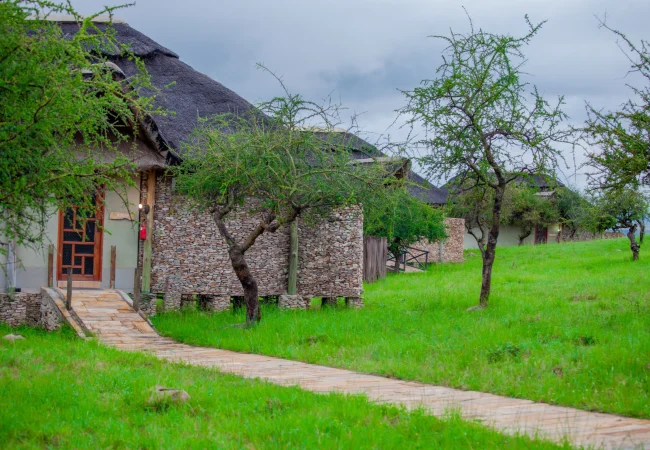
The land of the Serengeti can be a blend of wilderness and comfort. A crisp linen king-size bed? For sure! A viewing balcony to see the animals crossing by? You have it! Mouth-watering delicacies served under the starry night skyline? This is the place!
We’d love to help you set up a base away from home that offers experiences that will be everlasting. So, the following are some recommendations about Serengeti Accommodations:
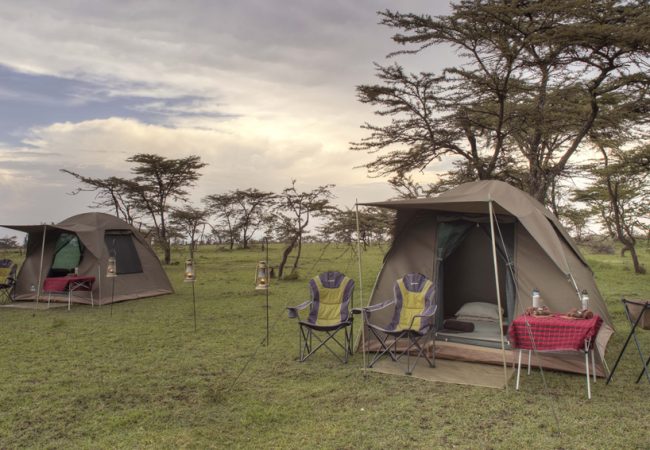
This is a great choice for budget travellers and backpackers looking to experience the authentic natural wonder of the Serengeti. The camp is created to offer great amenities while you relax in the comfort of your tented lodging.
There are night bushfires set up outside the camp as well. This is where you can unwind while gazing at millions of stars in the clear skyline of the Serengeti.
Thus, just let go and appreciate the beauty of the Serengeti Bush while living off the natural clock!
Just a notch above the budget choices, this camp may be light on the ground, because it’s eco-friendly, but it’s high on experience. This Serengeti Green-tented camp offers brilliant amenities. Such as non-stop safari adventures, stunning natural sceneries, sundowners and bush dinners.
Experience the mixture of immersive safaris and memorably luxurious rooms, right in the land where the human race began!
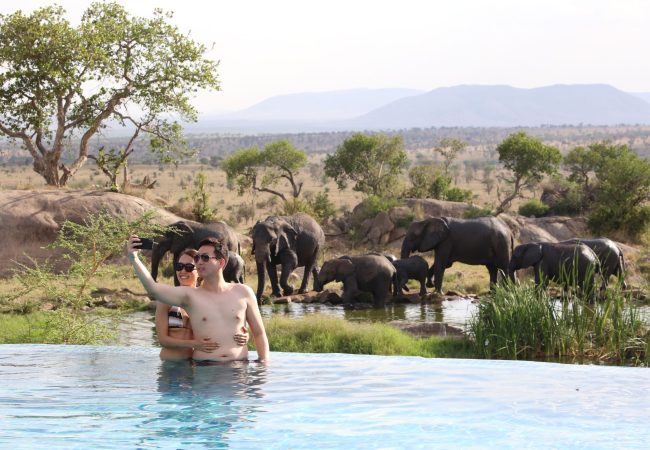
This is probably one of the most magnificent safari lodges in the savannahs of the Serengeti. If you’re looking for a top-of-the-line luxury safari lodge, then venture no further, this is it right here! The lodge sits right next to a large watering hole where several animals gather in all four seasons.
So, enjoy sundowners on your deck and spot a family of elephants drinking water and bathing. Or satisfy the adventurist in you and go on game drives and hot air balloon safaris. Whatever you’d like to do, a refreshing spa will be waiting where you can re-energize yourself for the next adventure.
| Budget Accommodations | Budget Accommodations |
| Embalakai Authentic Camp | Ang’ata Serengeti Camp |
| Serengeti Safari Lodge | Serengeti Wild Camp |
| Tanzania Wild camps | Bougainvillea Group |
| Tanzania Bush Camp | Tortillis |
| Midrange Accommodations | Midrange Accommodations |
| Serena | Acacia Camps |
| Karibu Camps | Sopa Lodge |
| TWC | Wayo Africa |
| Luxury Accommodations | Luxury Accommodations |
| Lemala | Nimali |
| Asilia | &Beyond |
| One Nature | Four Seasons |
| One Nature | Four Seasons |
| Elewana | Melia |
| Wellworth |
Serengeti National Park is more than a safari destination—it’s a living testament to the beauty and resilience of nature. Whether you’re a wildlife enthusiast or a curious traveler, the Serengeti promises an unforgettable journey.
1. What is the Serengeti famous for?
The Serengeti is renowned for the Great Migration and its rich biodiversity.
2. Can I visit the Serengeti year-round?
Yes, each season offers unique wildlife experiences.
3. How long does it take to explore Serengeti National Park?
Plan for at least 3-5 days to explore the park thoroughly.
4. Are walking safaris safe in Serengeti?
Yes, when conducted by professional guides.
5. What should I pack for my Serengeti safari?
Pack neutral clothing, a camera, binoculars, sunscreen, and insect repellent.
TAXES INCL/PERS

TAXES INCL/PERS
TAXES INCL/PERS
TAXES INCL/PERS
TAXES INCL/PERS

TAXES INCL/PERS

TAXES INCL/PERS

TAXES INCL/PERS

TAXES INCL/PERS
To receive our best monthly deals